


Apply to the C3 Fund
The C3 Fund is accepting applications from September 30 through 5:00 p.m. ET on December 31, 2026. Each application identifies two things: 1. the investment window, which is the type of financing you are requesting, and 2. the project category, which describes the qualified project the financing will support.
Each investment window is a financial product designed to remove a common financing barrier, with its own terms, eligibility criteria, and underwriting standards. There are five project categories, and an investment window is not limited to one of them. MCEC considers both the window and the project in its review, because the type of project affects how the financing is structured. Please review the investment windows and qualified projects below, then apply through the C3 Fund application.
MCEC staff will hold an informational webinar on September 29 at 10:00 AM with a walkthrough of the C3 Fund, the four investment windows, and the application.
MCEC reserves the right to adjust the investment windows at any time if required by law or at its discretion after the application period closes.
Investment Windows at a Glance
| Investment Window 1 | Investment Window 2 | Investment Window 3 | Investment Window 4 | |
|---|---|---|---|---|
| Product | Short-term bridge loan | Revolving line of credit | Project feasibility grant | Term financing |
| Designed For | Qualified project with a defined repayment source expected to be received within 12 months. | Companies with a portfolio of qualified projects, such as clean energy project developers and contractors | Early-stage analysis for qualified projects. Preference is given to projects that will benefit low- to moderate- income households and/or underserved communities. | Qualified projects and companies that repay over time from operating cash flow, contracted revenue, or a capital raise, such as fleet electrification and climate technology commercialization. |
| Amount* | Based on project need. | Based on project need. | Based on project need. | Based on project need. |
| Term | Typically, 12 months, with possible six-month extension in certain cases | Typically, up to 24 months | Based on project need, deliverables typically due within 12 months of grant closing | Based on project need. |
| Repayment | Interest-only during term; principal at maturity | Interest-only during term; principal at maturity | Grant, no repayment; milestone-based draws | Structured to the repayment profile of the project or company; may include an interest-only period, then principal and interest |
| Security or Guaranty | UCC-1 on all business assets or project assets, as well as personal or corporate guarantees, considered on a case-by-case basis. | UCC-1 on all business assets or project assets, as well as personal or corporate guarantees, considered on a case-by-case basis. | Unsecured | UCC-1 on all business assets or project assets, as well as personal or corporate guarantees, considered on a case-by-case basis. |
MCEC reserves the right to adjust the investment windows at any time if required by law, or at its discretion after the application period closes.
*Amounts and terms are set on a case-by-case basis. MCEC considers total project costs, the funds available in the C3 Fund, MCEC’s review and underwriting standards, and evaluation of project impact. Final amounts are at MCEC’s discretion and subject to approval of the Investment Oversight Committee.
Qualified Projects
The C3 Fund finances qualified projects, which are projects that advance the purposes of the C3 Fund under Section 10-855(b) of the Maryland Economic Development Article: reducing greenhouse gas emissions and enabling measures that address climate impacts. The application groups qualified projects into five categories:
- Renewable energy: projects that expand the deployment of clean energy generation.
- Energy efficiency and building decarbonization: improvements in energy management and efficiency that reduce greenhouse gas emissions from buildings, including energy and weatherization measures for low- to moderate-income households.
- Energy storage and resilience: projects that expand energy storage capacity or build community-scale infrastructure for resilience and energy equity.
- Clean transportation: projects that support the electrification of the transportation sector.
- Climate technology: companies developing or deploying advanced clean energy technology.
A project may fall under more than one category.

Maryland Provisions
Please be advised that as MCEC is an instrumentality of the State of Maryland, the following are some key terms and conditions that would be reflected in the transaction documents:
- Foreign Jurisdiction, Venue, Arbitration, etc. Because of issues related to the sovereign immunity of the State, MCEC cannot consent to the jurisdiction of courts outside Maryland or to any form of binding arbitration. The Company must agree that all legal actions against MCEC will be brought in Maryland state courts.
- Indemnification. Under Maryland law there are limitations on the ability of MCEC to enter open-ended future financial commitments such as indemnification or contribution obligations or “prevailing party” legal expense provisions. MCEC will not agree to indemnification, limitation of liability, or coverage of attorney’s fees.
- MCEC Documents. MCEC requires all companies receiving funding from MCEC to execute MCEC-Specific Representations, Warranties and Covenants in the form approved by the Office of the Attorney General. The Specific Representation and Warranties address such issues as the Company standing, current payment of taxes, conviction of bribery or other offenses, and debarment by government agencies.
- Public Information Act: MCEC is subject to the Maryland Public Information Act, Ann. Code Md., General Provisions Article §§4-101 to 4-601 (“PIA”). The PIA generally prohibits the disclosures by MCEC of trade secrets, “confidential commercial” or “confidential financial” information but the ultimate determination as to disclosure may be made by a court. MCEC will not disclose “confidential commercial” or “confidential financial” information regarding the Company except as required by law or as otherwise permitted under any documents, instruments, or agreements to which MCEC is a party.
Investment Window 1: Short-Term Bridge Loans
Investment Window 1 (IW1) provides short-term bridge loans for predevelopment and early construction expenses. Proceeds cover the upfront costs project sponsors face at a stage when private lenders are typically reluctant to engage. IW1 helps sponsors maintain momentum without waiting months to close permanent financing or tax equity deals.
IW1 is built for projects that have a defined scope and a repayment source already in view, such as tax equity, permanent debt, a construction-to-permanent conversion, project sale proceeds, or federal tax credit proceeds. IW1 can fund multiple projects in one bridge loan, but the use of proceeds should be aligned with the projects and are typically structured as one disbursement at closing.

Investment Window 2: Line of Credit
Investment Window 2 (IW2) provides a revolving line of credit that provides flexible capital to companies carrying a portfolio of qualified projects, such as project developers and contractors.
IW2 is built for a portfolio rather than a single site, whether that portfolio is a defined set of projects identified today or a rolling pipeline where the specific projects change over the life of the facility. As the line is repaid, the same pool of capital is redeployed to support additional qualified projects across Maryland.
Each draw request must be supported by invoices or, where appropriate, an itemized statement documenting use of funds against permitted uses.

Investment Window 3: Project Feasibility Grants
Investment Window 3 (IW3) provides grant funding for early-stage analysis: the work that turns a clean energy concept into a project ready for financing. Many projects never reach the financing stage because feasibility analysis, engineering studies, design, financial modeling, and permitting are too expensive to fund out of pocket and too early to attract project capital.
Preference is given to qualified projects that benefit low- to moderate-income households or underserved communities, sponsored by organizations that do not have the staff, funding, or technical expertise to carry out this work on their own. Typical applicants include nonprofits, local governments, housing authorities, schools, and other community-serving institutions. MCEC gives priority to applications that show both the community benefit and the need for grant support. Applicants that can fund predevelopment work themselves are generally better served by Investment Window 1 or 2, where these costs are eligible uses.
Core eligible activities include feasibility studies, energy audits, technical and engineering analysis, energy modeling and load analysis, schematic and preliminary design, financial modeling and capital stack development, and resource assessment and siting analysis.
To some extent permitting fees and environmental review, interconnection study deposits are allowable with documented justification. IW3 typically does not fund construction or equipment costs, subscriber acquisition, or work already funded by another grant for the same scope. Because this work comes before a project is ready for construction, strong applications show a clear implementation plan, a reasonable approach to funding the project if feasibility is confirmed, site control or a credible path to it, and capable project leadership.
Investment Window 4: Term Financing
Investment Window 4 (IW4) provides term financing for qualified projects and companies that repay from operating cash flow rather than from a single financing event. Many clean transportation and climate technology projects are ready to deploy but have no tax equity closing, permanent loan, or sale ahead of them to repay a short-term loan, and they need more time than a bridge loan or line of credit allows. IW4 fills that gap.
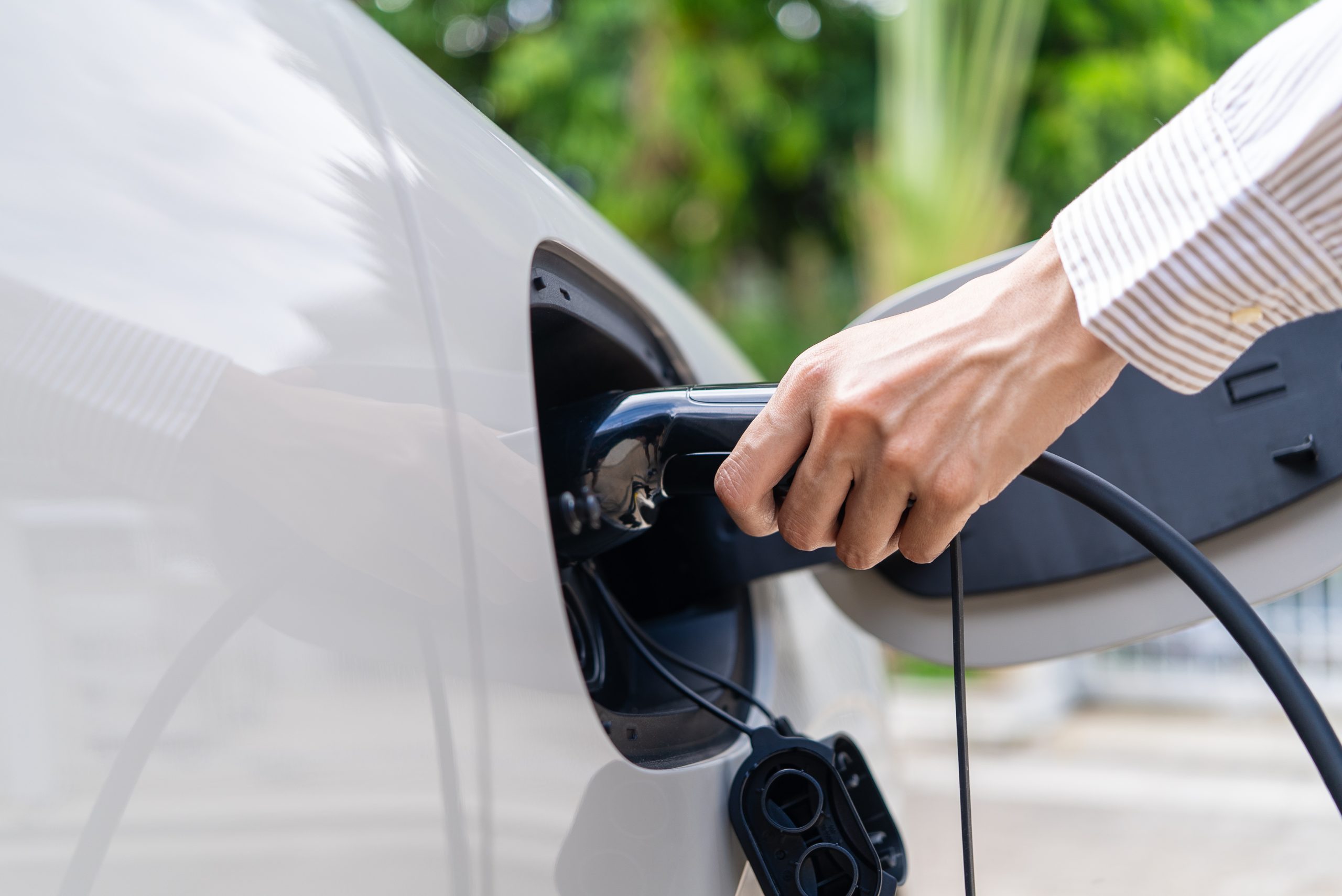
IW4 is built for a defined use of proceeds and a reliable source of repayment over the term, such as contracted revenue, operating savings, or company cash flow. Examples include fleet electrification, including vehicles and charging infrastructure, and the commercial deployment of advanced clean energy technology in Maryland.
MCEC structures each IW4 investment to fit the repayment profile of the project or company. Most are term loans, with an initial interest-only period where warranted, followed by regular payments of principal and interest. For a company at the commercialization stage that is raising capital from other investors, MCEC may invest alongside those investors using another structure, such as a convertible note. Companies at an earlier stage may be better served by the Climate Technology Founders Fund.

How to Apply
There is one C3 Fund application for all four investment windows. It opens with a short set of eligibility questions, then asks which type of investment you are seeking: bridge loan, line of credit, feasibility grant, or term financing. Your answer determines which questions you see next, so you only complete the sections that apply to your request.
You may apply to more than one investment window. Each request requires its own application. If you are not sure which window fits, the application includes an option to request a conversation with MCEC staff instead.
What Happens After You Apply?
MCEC conducts a preliminary review of every submission and will contact every applicant with the outcome of that review. If your application advances, we will send a list of the documents we need and provide access to MCEC’s secure data room, where you can upload the requested documents. You do not need to gather those documents before you apply.
Additional Program Information
Requirements That Apply to Every Investment Window
Eligibility
All windows are open to Maryland-based or Maryland-serving entities. Applicants must be in good standing with the Maryland Department of Assessments and Taxation. The proposed project must benefit Maryland, and the applicant must be willing to agree to the terms and conditions set by the IOC and those applicable to receiving financing from MCEC.
What the C3 Fund Does Not Finance
The C3 Fund typically does not finance long-term operating expenses. No window funds work outside the scope of the approved C3 Fund Guidelines, or any project that installs new equipment that uses fossil fuels or improves the efficiency of existing equipment that uses fossil fuels.
Community Impact
Under the Section 10-855 of the Maryland Economic Development Article, at least 40% of the C3 Fund balance in each fiscal year is reserved for qualified projects in communities with low- to moderate-income (LMI) households. The C3 Fund statute defines an LMI household as a household located in a census tract with an average median income at or below 80% of the average median income for the State. Applicants are encouraged to maximize the benefits their project delivers to these communities and are asked to describe those benefits in the application. MCEC may include terms in the financing documents tied to the LMI commitments made at application.
Financing Commitment
Submission or approval of a financing application does not constitute a commitment or guarantee of financing or funding. All financing or funding remains subject to approval of the Investment Oversight Committee (IOC), completion and execution of satisfactory legal documentation, and fulfillment of all closing conditions.
Requirements for Loans and Other Financing (Investment Windows 1, 2, and 4)
Eligible Uses
Proceeds and draws may fund direct costs of developing, constructing, and deploying qualified projects. Examples include interconnection applications, studies, and deposits; engineering and design; permitting; equipment deposits and procurement; vehicles and charging infrastructure; site preparation and contractor mobilization; and initial construction and commissioning.
Project Requirements
Each project must demonstrate technical and economic viability, site control where the project requires a site, and a clear source of repayment. For short-term financing, that means a path to construction financing, permanent financing, or another take-out, and preference is given to projects with indicative term sheets or commitments from take-out lenders. For longer-term financing, it means a reliable source of repayment over the term, such as contracted revenue, operating savings, or company cash flow.
Credit Standards
Borrowers are expected to show an equity contribution that reflects their role in the project. MCEC recommends that C3 financing be one part of the project’s funding, not the only source. Additional project debt should be coordinated with permanent financing. Personal or corporate guarantees from sponsors are preferred.
MCEC also evaluates borrowers against financial parameters including but not limited to current ratio, debt-to-equity, tangible net worth, and minimum unrestricted cash. For borrowers with a limited operating history, MCEC also considers cash on hand relative to operating needs, capital committed by other investors, customer contracts, and independent validation of the technology. These metrics are not the sole determinants of financing decisions, and exceptions may be approved where other credit strengths, risk-mitigating factors, or project impact warrant.
Collateral
Collateral is determined on a project-by-project basis. A UCC lien on all business assets or project-specific assets, including financed vehicles and equipment, may be required. Guarantees and other forms of security may be warranted and will be determined through the underwriting process.
Questions?
Contact the C3 Fund team at [email protected], or visit the C3 Fund FAQ page.